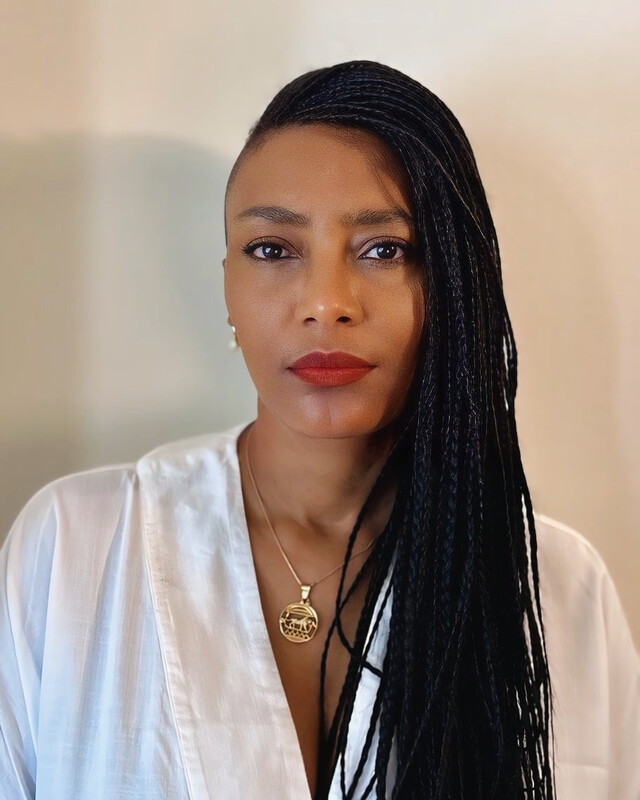
INTERVIEW with Yana Bille-Chung
When a kind young couple is offered the chance of a lifetime to purchase their dream house from an ailing octogenarian at a fraction of its asking price, they eagerly accept. However, the deal comes with a significant catch: the older woman must live with them until her death, at which point the house will become theirs.
7/2/20266 min read
Can you tell us about your latest film project and the process you went through in bringing it to life?
Till Death follows a young couple struggling to buy their first home in Los Angeles's unforgiving real estate market. They are offered an irresistible opportunity: acquire a beautiful house for a fraction of its market value, on the condition that they share it with its current owner, a frail, ailing octogenarian, until her death, at which point the property will become theirs.
What initially appears to be the deal of a lifetime soon becomes an unsettling ordeal. Not only does the elderly woman not die, but she grows healthier with each passing year, while the wife grows more frustrated, suspicious, and filled with dread.
After spending years working on a feature documentary, I found myself eager to make something that wouldn't take the better part of a decade to complete. While on location filming the documentary, I had dinner with our director of photography, Jacki Moonves, and one of our producers, Kamron Shahriaree. During a conversation, I pitched them Till Death, a script I had written several years earlier.
The project felt like the right fit. With a single primary location and just three central characters, it was both compelling and realistically achievable. Jacki and Kamron responded positively, and when Kamron offered his mother's house as the film's principal location, the project truly came to life. The house was more than a setting; it was a central character in the story. Securing such a distinctive location at the outset gave us the foundation we needed to move the film from idea to reality.
Back home, I revamped Till Death and introduced new elements, including a storyline centered on an aspiring influencer as the main character. This made the story feel more contemporary while preserving its core themes, such as multigenerational relationships, elderly loneliness, and the moral ambiguity of characters operating in gray areas.
What inspired you to become a filmmaker and pursue a career in the film industry?
As far back as I can remember, I’ve always been drawn to the power and magic of stories. I love listening to them, watching them, reading them, and telling them. Even as a young child in Yaoundé, Cameroon, I was writing and directing short plays. Stories helped me connect with others, broaden my understanding of the world, and experience a joy that was difficult to put into words. I’ve also always been fascinated by people's lives and the motivations behind their choices.
What challenges did you encounter during the filmmaking process and how did you overcome them?
I come from a production background, so the shoot itself ran relatively smoothly, largely because I surrounded myself with the right people. The only significant challenge came during post-production, when it took us some time to find the right colorist. I eventually realized I was trying to solve the problem on my own, so I reached out to two of our producers for help. Within minutes, they had connected me with the perfect person for the job. That experience reinforced an important lesson: you don't have to carry everything on your own. Trust the people around you and lean on your team.
What was the most memorable moment for you during the production of your film?
Although I had known some members of the team for years, it was inspiring to see firsthand just how skillful they were. Their passion, dedication, and commitment to bringing the film to life exceeded every expectation. I felt incredibly fortunate to be surrounded by such remarkable talent, generosity, and support.
Can you share any interesting anecdotes or behind-the-scenes stories from the making of your film?
Building the horse, Sydney, was a constant source of giggling during pre-production and on set. And I'll leave it at that.
How do you approach storytelling in your films? What themes or messages do you try to convey?
I love a meaty story that takes me to unexpected places. I tend to gravitate toward complicated characters, layered conflicts, and morally ambiguous questions. Rather than focusing on a clear message, my stories aim to probe our humanity and unsettle audiences in ways that invite reflection and uncomfortable self-examination. I’m especially interested in moments when the audience shifts from spectator to voyeur, when watching becomes more intimate and uneasy.
What is your preferred genre of filmmaking and why? Are there any specific directors or filmmakers who have influenced your work?
I’m less interested in genre than in the experience of going on an adventure. I want to feel and learn something from that journey. I’m drawn to films with depth and layers, work that introduces me to realities or concepts I may not have encountered before.
As a structuralist cinema fan, I’m also deeply interested in a film’s conceptual form: how it is constructed, its framing, sound design, camera movement, and the invisible threads that bind the narrative together.
Filmmakers such as Mati Diop, Chantal Akerman, Charles Burnett, Apichatpong Weerasethakul, Park Chan-wook, and Alejandro Jodorowsky are among my favorite directors.
How do you select your cast and crew for your film projects? What qualities do you look for in collaborators?
I tend to work with people I’ve collaborated with before. I value the opportunity to grow alongside a team as we continue refining our visions. A professional, respectful attitude is essential, as is a solution-oriented mindset. I’m drawn to collaborators who help move things forward rather than create additional problems to solve on set. Ultimately, I look for people who treat the work with a sense of ownership and care, as if it were their own. It's never just my child; it belongs to all of us.
How important do you think film festivals are for independent filmmakers, and what has been your experience with film festivals so far?
Film festivals are essential for independent filmmakers, offering a platform to showcase work, connect with audiences, build relationships with industry professionals, and learn from fellow filmmakers. My experience with festivals has been very positive. I enjoy the instant feedback while watching the movie with an audience. The festivals have been a meaningful source of inspiration, growth, and opportunity.
Can you tell us about any awards or recognition your films have received and how they have impacted your career?
Till Death has received two awards so far: Best Screenwriting and Best Actress at the Diversity in Cannes Showcase. This is a recent development, so I’ll have more to share in the coming year. In the meantime, the film has already opened a few meaningful opportunities, including meetings to discuss/pitch future projects and an invitation to return to my alma mater, UC Riverside, as a guest speaker.
How do you handle feedback and criticism of your films? How do you use it to improve your craft?
I welcome notes. I'm also learning to hear the note behind the note and recognize when feedback is genuinely helpful versus when it is not constructive.
What do you enjoy most about the process of filmmaking? Is there anything you find particularly challenging?
I enjoy the journey from a burgeoning idea in one’s mind to a finished work that can be seen by dozens or even thousands of people. I’m drawn to collaboration, to the idea of a group of people all moving in the same direction, learning, growing, and bringing their best to the set or the editing suite each day.
What can be challenging at times is the internal dialogue that accompanies making creative decisions, the quiet battles that arise when trying to arrive at the right choice. Often, it’s the nights spent working through problems, digging deep to find thoughtful and smart solutions to creative challenges.
How do you approach the distribution of your films? What strategies do you employ to reach a wider audience?
At this stage, I view film festivals as the first step in Till Death’s distribution journey. My focus has been on connecting with audiences through festival screenings, building relationships within the filmmaking community, and learning how different audiences respond to my work. In the future, we will explore additional distribution avenues, including online platforms and partnerships to help our film reach a wider audience.
Our producer, Constance Ejuma, has been overseeing Till Death's audience outreach and engagement strategy. She has been developing content to maintain and build interest in the project. Her efforts have been reflected in our growing audience engagement and increased visibility.
What advice do you have for aspiring filmmakers who are just starting their journey in the film industry?
No one is coming to save you. Get your friends together and go make movies. Build your audience as you go. Learn and grow along the way, but don’t wait for permission. You don’t need it.
Finally, can you share with us your future plans and upcoming projects as a filmmaker?
We’re still working on the documentary. I’m currently writing the next short film I plan to direct before the end of the year. In parallel, I’m developing a web series in collaboration with two of the producers from Till Death, set in the world of AI.