INTERVIEW with Firouz Farman-Farmaian
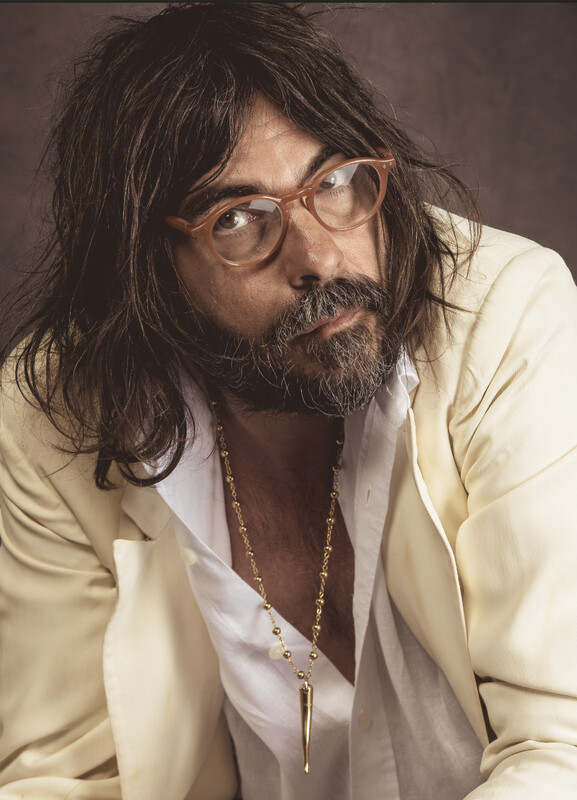
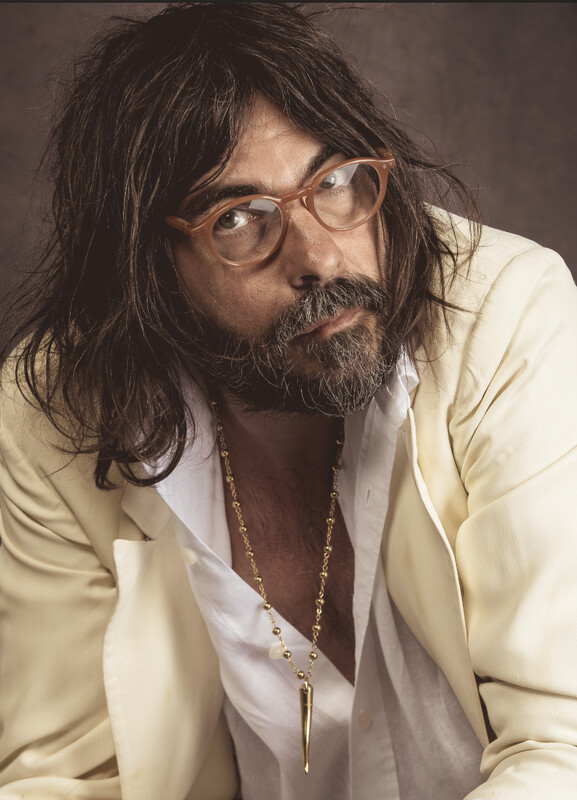
Firouz FarmanFarmaian, born in 1973 in Tehran, Iran, is a contemporary artist, author, composer, and cultural producer based between the South of France and Essaouira, Morocco. As a Cultural Ambassador of the Kyrgyz Republic (2021-2023) and co-founder of We R The Nomads Agency, he bridges dialogues between cultures. His work includes the installation Gates of Turan at the 59th Venice Biennale (2022) and ongoing project Shiraz 77 (2021-2025). Firouz is also a musician with several gold-certified albums, composed the soundtrack for PATH (2025), and is currently developing a new feature film, Season of the Witch. His artistic practice spans visual arts, film, music, and technology, exploring themes of transformation and cultural dialogue.
1/27/20265 min read
Can you tell us about your latest film project and the process you went through in bringing it to life?
PATH centers on my journey as a contemporary artist, as I was appointed Cultural Ambassador to a Central Asian nation, the Kyrgyz Republic. I set out to produce the first-ever Kyrgyz Pavilion for the 59th Venice Biennale, connecting with an ancient nomadic culture to create the ‘Gates of Turan’ installation in Venice. The film documents the delivery of such an endeavor, unveiling the fabric of the magic along with its inherent challenges.
What inspired you to become a filmmaker and pursue a career in the film industry?
As a multi-disciplinarian, film has been embedded in the fabric of my production from the outset. Movement—and the relationship of moving image to sound—has always fascinated me. At the Paris Beaux-Arts, I instinctively experimented with Super 8mm film, producing a series of avant-garde shorts and eventually making my first feature-length experiment in the form of an ethno-musical documentary called the ‘Gnawa Trail,’ later screened at the Louvre’s Art Décoratif Museum. From that point on, film has always accompanied my many explorations.
What challenges did you encounter during the filmmaking process, and how did you overcome them?
For one, the shooting of PATH coincided with the first week of the Ukraine war. Closed airspace and routes out of Kyrgyzstan isolated us from the outside world and threatened the project as a whole. We adapted locally and overcame restrictions. Overall, the toughest challenge remained in synchronizing production with the rollercoaster funding of the Kyrgyz Pavilion—the survival of the film was endangered at key moments. Again, we adapted: when you roll with the flow, you overcome roadblocks.
What was the most memorable moment for you during the production of your film? Can you share any interesting anecdotes or behind-the-scenes stories from the making of your film?
PATH’s soundtrack was entirely written and recorded with my fusion rock ensemble, FORRM. Sound is central to my vision, and music plus sound design set the pace and mood of my filmmaking. FORRM is a delocalized sound project that includes members scattered across Spain, France, and the U.S. The recordings occurred in various studios in Tarifa, Essaouira, New York City, and the South of France as the editing process advanced in a dynamic creative exchange between sound and image. We had a blast.
In the winter of 2024-2025, we were in NYC for a couple of art shows and gigs, the central one happening at the Museum of Arts and Design on Columbus Circle. I came up with the idea to trigger our sound with a generative AI algorithm that would create psychedelic images live from the film’s rushes with a layer of graphics derived from the Gate of Turan Venice installation. We worked with a New York-based AI agency, Interactive Items, for a while to refine the idea, but the live result was mind-blowing. The recorded 4K sequence was directly embedded into PATH to become its credit sequence and graphic design. How cool is that?
How do you approach storytelling in your films? What themes or messages do you try to convey?
I am a visual and sound artist primarily working in the realm of abstraction, so images and sound usually form long before the story does. I trust that first idea and stick to it, believing that the original spark holds the key. If you keep the focus long enough, the story emerges naturally. Usually, what unfolds relates to the core of your inner conversation.
The themes related to displacement, nomadism, and spiritual research usually drive my practice.
What is your preferred genre of filmmaking and why? Are there any specific directors or filmmakers who have influenced your work?
I relate to what essayist William Arrowsmith wrote about Michelangelo Antonioni: “We move like the photographer in ‘Blow-Up,’ stripping ourselves of the baggage that encumbers our journey to where we are—into this new abstraction.” As in a Rothko painting, film can elevate us out of perceived reality and slide us into alternative timelines.
Growing up, my father exposed me to the Italian neorealism of Antonioni, Fellini, and Marco Ferreri. Later, I dove into the French nouvelle vague and the whole cinephile movement, chasing Godard and Truffaut in Parisian night cinemas and collecting vintage Cassavetes and early Jarmusch films along the way. Wong Kar Wai’s Chungking Express is a personal favorite. There’s been a lot of talk about Jodorowsky lately in relation to my upcoming feature film.
How do you select your cast and crew for your film projects? What qualities do you look for in collaborators?
To elaborate on Jodorowsky, his approach would be to check into the St. Regis—Salvador Dalí’s New York City hotel—slip a letter under his door, and invite him for whiskeys at the piano bar. It worked well.
My crew consists mostly of a close-knit tribe of talented multidisciplinary professionals I’ve known for a very long time. We share common objectives and do not fear stepping outside the box.
How important do you think film festivals are for independent filmmakers, and what has been your experience with film festivals so far?
I’m quite new to this, coming from the contemporary art scene, but I really like the indie festival format and the efficient connectedness they offer. I’ll be attending the Berlinale to screen PATH for the first time and following it around festivals this year.
Can you tell us about any awards or recognition your films have received and how they have impacted your career?
I am not a huge supporter of the award recognition process related to art in general. I relate to off-format artists tracing their own paths, playing in and out of the game. Fellini is a great inspiration in that respect. It is the only real road to change: breaking off from the mediocrity of the status quo.
How do you handle feedback and criticism of your films? How do you use it to improve your craft?
Jarmusch published a quote as a story I reshared a couple of weeks ago—I will use it in this instance:
"I will take your notes, but I'm under no obligation to address them. If you agree, let's go forward. If you don't, let's not waste each other's time."
—Jim Jarmusch
What do you enjoy most about the process of filmmaking? Is there anything you find particularly challenging?
Compared to the free-format approach of contemporary art, the process of filmmaking is very defined. Writing, development, preproduction, production, and postproduction are layers with intrinsic creative characteristics that need to coexist to create a great picture. I personally enjoy deconstructing each of these steps, treating them as specific art projects. The challenge is to create something unique and meaningful that will also have a shot at the box office.
How do you approach the distribution of your films? What strategies do you employ to reach a wider audience?
I prefer keeping control of my creative process for as long as it is doable. In this instance, I prefer collaboration with independent distributors on a territory-by-territory basis via my own production company, We R the Nomads Agency, instead of a one-shot global deal where a corporation will undoubtedly call the shots.
What advice do you have for aspiring filmmakers who are just starting their journey in the film industry?
Cross-format experimentation.
Finally, can you share with us your future plans and upcoming projects as a filmmaker?
My first feature film, Season of the Witch, has been in writing for over 10 years and has recently moved into development and early preproduction stages, involving European, Moroccan, and U.S. partners, including a segment of the casting and the writing of the soundtrack. I’ll be pitching it at the Berlin EFM, happy to meet!